

010. animation for Good
Earlier this year, one of our series - Big Lizard - got a Special Mention at Big Syn, a festival for films with sustainability at their heart. It was a lovely surprise, not least because Big Lizard is a preschool adventure about a girl and her enormous reptilian best friend, not an agenda-driven film for a major charity organisation.
But sat in the audience I realised the festival had a point. Tucked inside all the fun is a show about a fragile planet, not unlike our own, with relatable people pushing us messages on cooperation, and figuring out what to do to protect their home. And it sent me back through sixteen years of Beakus projects with a slightly different lens on - because a surprising amount of what we've made has been, one way or another, animation for good.
The National Gallery. The British Library. Wellcome Trust. Médecins Sans Frontières. The Ellen MacArthur Foundation. The NHS. Not a deliberate strategy so much as a slow realisation: this is the work we keep saying yes to, and it's the work I'm proudest of.
So I've been mulling over a question:
Why is animation such a good fit for organisations trying to do good in the world?
I've written elsewhere about the neuroscience - how brains process animation - but here's what sixteen years making animation has actually taught me.
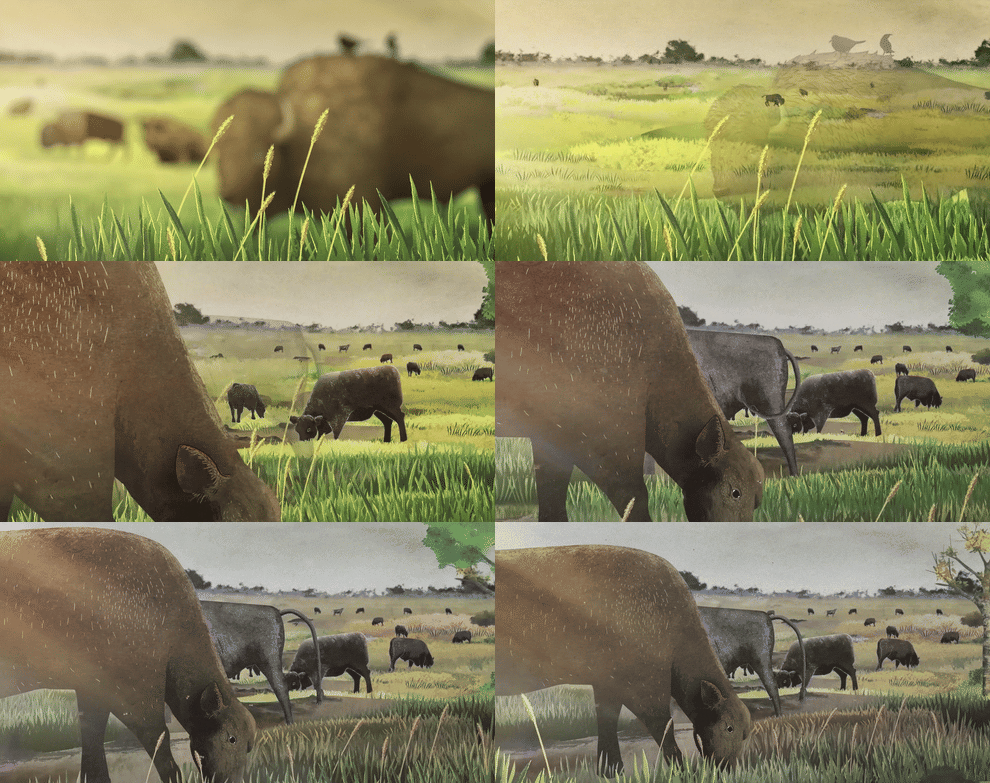
1 / It can hold a hard subject gently. A lot of mission-driven work involves things people would rather not look at - conflict, illness, waste, injustice. Live footage of those things can be so distressing that people look away, which is the opposite of what we need. Animation can carry real weight without tipping into something unwatchable. For Médecins Sans Frontières we made a film about how war wrecks a country's health long after the fighting stops - narrated by Jim Broadbent, drawn rather than filmed, and all the more affecting for it.
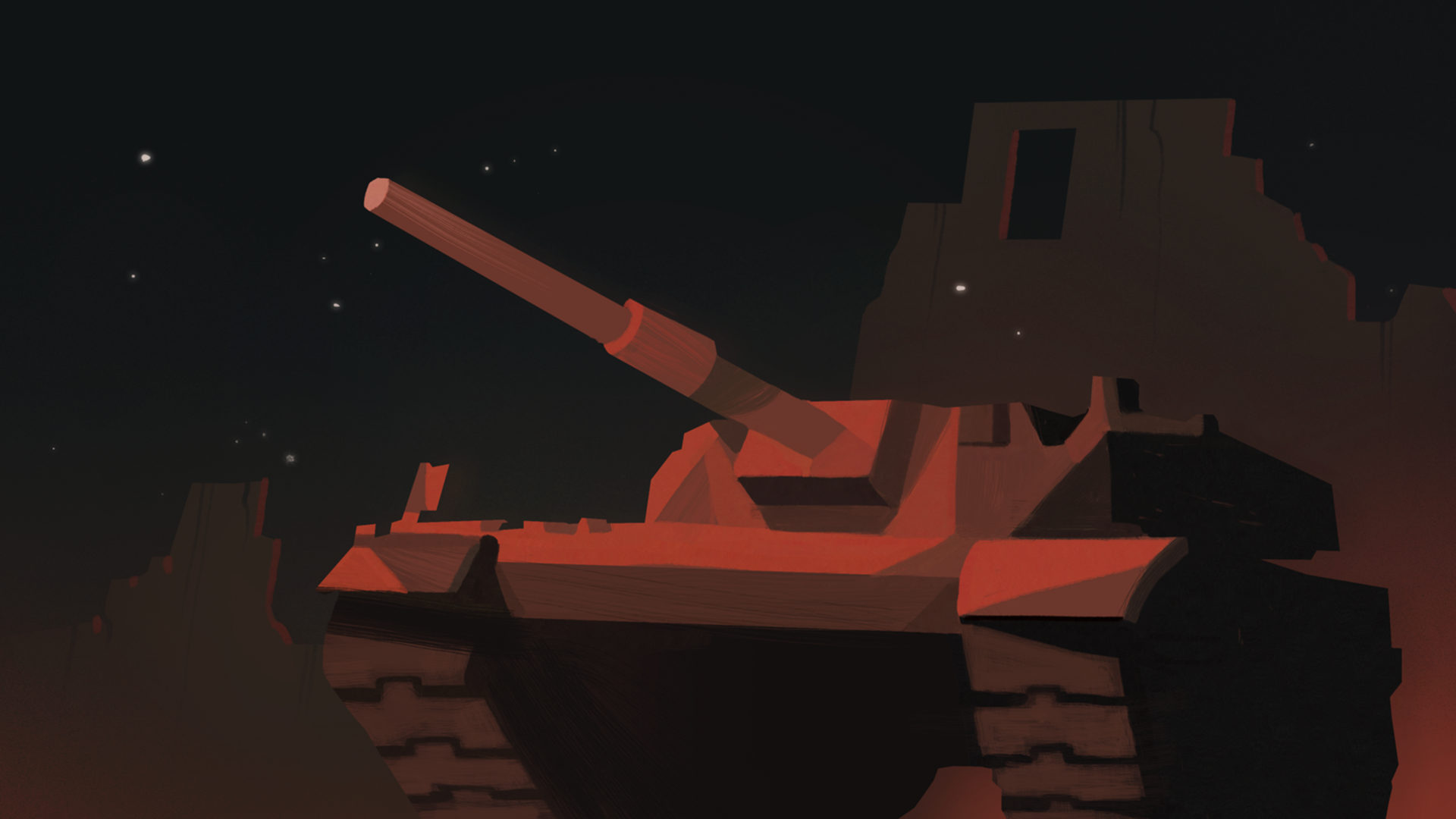
Design from our work with Médecins Sans Frontières
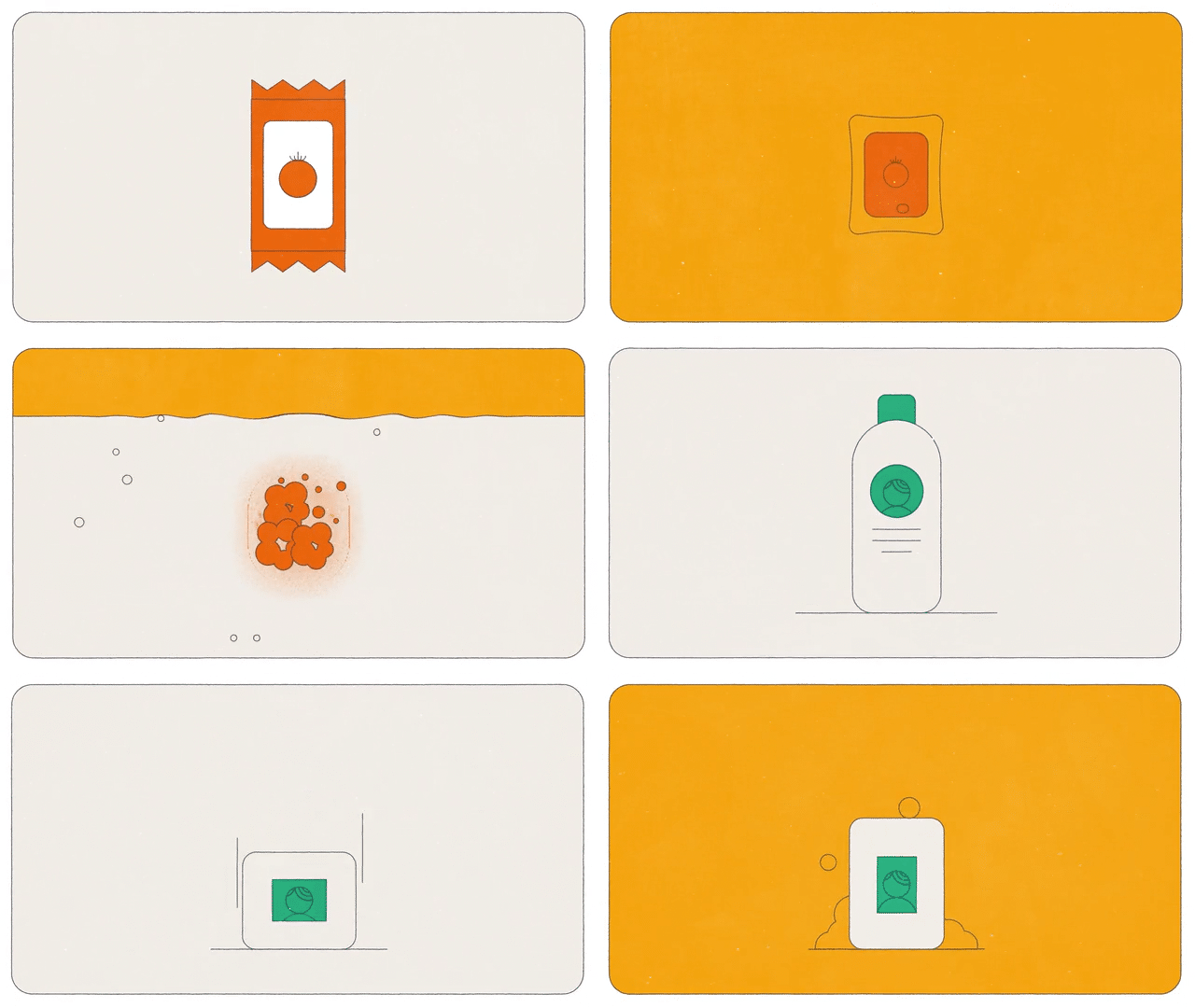
2 / It makes the invisible visible. So much of this work is about systems you can't photograph. You can't point a camera at "the circular economy" or "antimicrobial resistance". You can draw them, though. That's most of what we did for the Ellen MacArthur Foundation - turning an industrial argument about plastic into something a busy person would actually watch to the end. (Here's how we did it.)
3 / It doesn't age, and it doesn't date. A charity film often needs to work for years, across countries, without a specific face or place pinning it to one moment. Drawn characters don't get older, don't leave the organisation, and don't need a re-shoot when the guidance changes. For a sector where budgets are tight and shelf-life matters, that's not a small thing.
4 / And it disarms. People put their guard up around a message. They lower it around a story. A well-drawn character and engaging animation gets past the part of us that's braced to be sold to - and once you're past that, you've got a chance of being remembered.
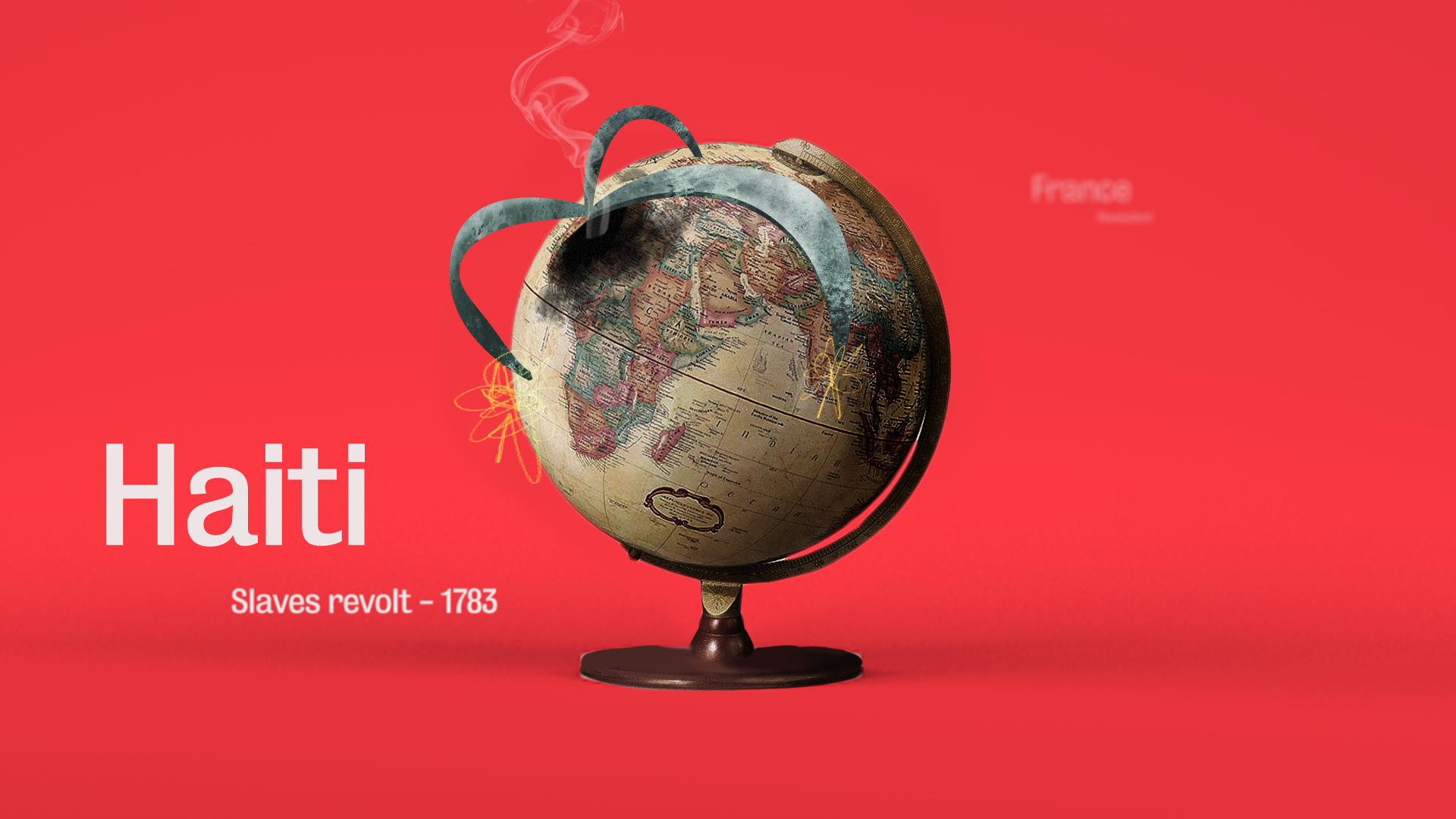
Development work for a project with the National Maritime Museum.
None of this makes animation the right answer to everything, of course. Sometimes a real face and a real voice is exactly what a cause needs, and no amount of beautiful drawing beats it. Part of the job is knowing which is which.
But when the subject is complex, or difficult, or invisible, or simply needs to outlast this year's campaign, animation earns its place. Sixteen years in, I still find this area of work most satisfying: taking something that matters, and giving it the best possible chance of being seen, understood, and remembered.
In short, I feel fortunate to have accidentally specialised in animation for good.
If you're at a charity or NGO weighing up a film, here's more on how we work with the sector.
Beakus is a 2D animation studio in Lewes, near Brighton. If you're at a charity or NGO thinking about a film, here's more on how we work with the sector - and we'd love to hear what you're working on - studio@beakus.com.
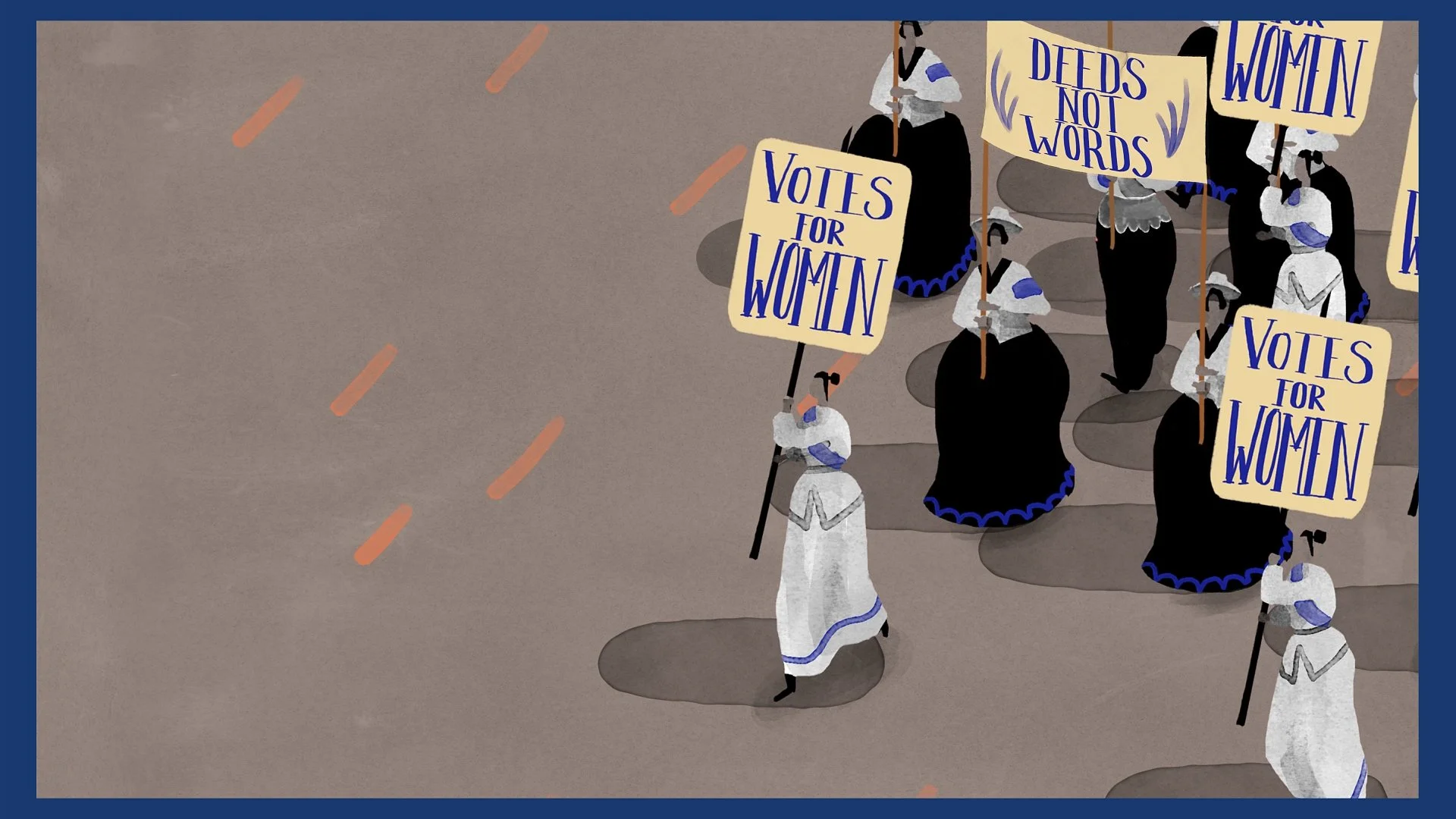
From our work for British Library